From Reservation to Classroom: A Three-Generation Literacy Connection (Article #27)
Second graders link their school and parish projects to the service experiences of adults on a Native American reservation mission trip, creating a shared story of learning and giving.

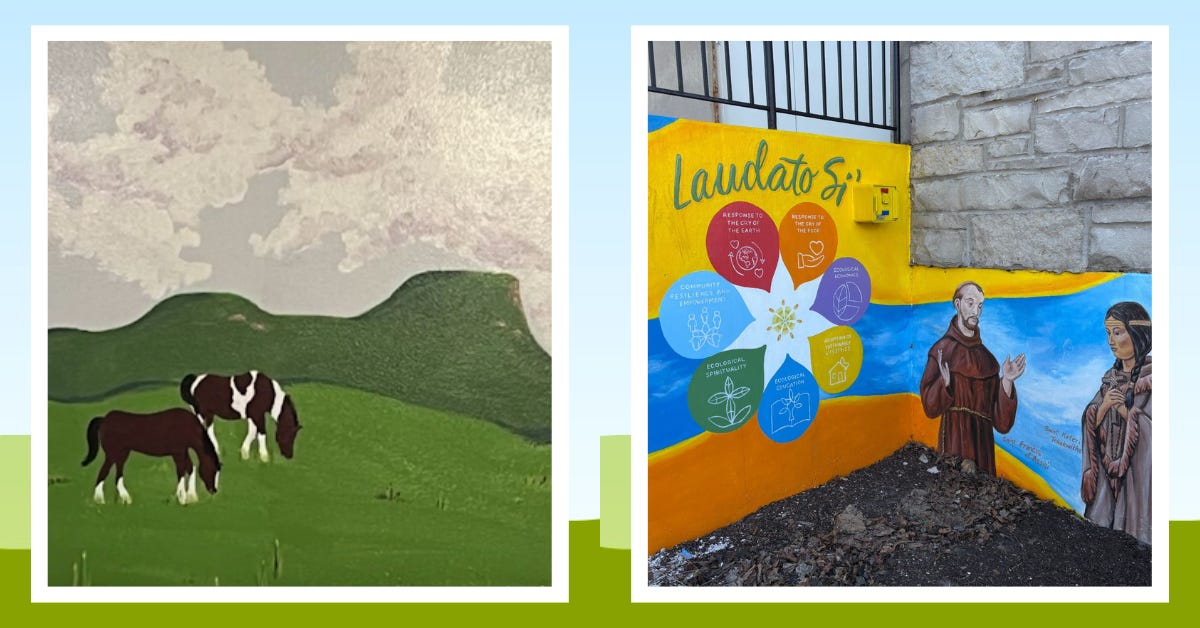
On the day my mom showed up to the Catholic school where I worked and where my daughter also attended, we were all dressed alike– black pants, light-colored tops and jean jackets.
It just so happened to be the school’s Teacher Appreciation Week, and on this particular day, the theme encouraged students to dress as their favorite teacher. My daughter dressed like me, and I like my mom, who had spent her career as an elementary school teacher.
Three generations of women shared one purpose that day– to help my mom present about her recent mission trip to my daughter’s second grade class.
My daughter’s class had been studying literature about Native American cultures. Such works included “The Buffalo Are Back” by Jean Craighead George, “Plains Indians (First Nations of North America)” by Andrew Santella, and “The Legend of the Bluebonnet: An Old Tale of Texas” by Tomie dePaola.
The second grade classes were also preparing for a field trip to The Grove in Glenview, Ill., a National Historic Landmark serving as a preserve and outdoor museum with exhibits about the early indigenous life in Northern Illinois.
When I first asked my mom to present to her granddaughter’s class about her recent mission trip to Tree of Life in Mission, South Dakota, where she and others from her church spent a week working on projects requested by the Rosebud Lakota community, she hesitated.
“It’s been a while since I stood at the front of the classroom,” she murmured.
“Do you think second graders would be interested in an adult mission trip?” she wondered.
Additionally, my mom attended a Protestant church, but this presentation would be adapted for students in a second grade Catholic classroom preparing for First Communion.
I assured my mom both churches were of the same faith and served the same community; we could bridge any gaps of concern, I said.
“Don’t forget, Mom, one purpose of a mission trip is to share what you learned with a community upon your return,” I reminded her, recalling my own presentation my mom asked me to share with her students years ago after I returned from serving in a Russian orphanage during a college spring break trip (Read more about that mission trip literacy connection with Article #24 “Poetry with Purpose.”).
With time to reflect, my mom finally agreed.
“But only if you help me with the presentation,” she said.
And that’s when a three-generation literacy opportunity unfolded.
But even before this opportunity, my mom and I had worked on another literacy project in anticipation of the mission trip.
To prepare the mission participants, my parents had been tasked with leading a three-session book study of Neither Wolf Nor Dog by Kent Nerburn, a recounting of Nerburn’s time in heartfelt, but often difficult, discussions with a Native American elder named Dan.
Even though I would not be participating in the mission trip, I jumped at the chance to help my parents lead the discussions by tapping into my former English teacher roots. I pulled passages that explored the perspectives of both Nerburn’s and Dan’s with this framing:
“The last line of Neither Wolf Nor Dog by Kent Nerburn is the following: ‘I remained there, motionless, listening, until long after there was anything left to hear’ (pg. 334). Nerburn arrives at these concluding thoughts after a long journey he takes with a Native American named Dan. Through this journey, Dan learns to move from silence to voicing his people’s stories while Nerburn, a White writer, learns to truly listen in order to properly help Dan share his insights regarding Native American and non-Indigenous communities, the pain that drives these two worlds apart, and the hope Dan maintains for healing the divide.”
Those in the book study were prompted to consider the following questions:
What stories do Native Americans have to share with non-Indigenous communities? Why do these stories matter? Why is it hard for these stories to be shared?
What steps do non-Indigenous communities need to take in order to actually hear/listen to these stories?
How is the act of storytelling important for bridging these two worlds?
How do we, as those coming from outside the tribal community, respectfully engage in service without imposing our own beliefs and cultural norms on them?
What do we need to know so that we can build a respectful relationship with those on the Rosebud Reservation while we are there?
As a result, a church community provided adults with the opportunity to engage in a literacy-driven experience that prompted deep self-reflection around hard discussions.
Literacy also became a connecting force during the mission trip as tribal members shared their stories and history with the mission group.
One memorable night a Lakota elder sat around a campfire with my parents’ church group, sharing a Lakota creation story about the star people. The story told of a Lakota woman who joined the Star Nation, brought sacred wisdom back to Earth, and connected the Lakota people to the stars as well as to their ancestors.
Inspired by this moment, my mom would track down printed versions of this story to give to each second grade teacher as a thank-you for allowing her to present to the students.
And the students were engaged with my mom’s presentation. Looking back, I cannot tell you the types of questions they asked, but I remember hands shooting high into the air as they eagerly awaited to be called on to ask questions about my mom’s experience. My mom and I both recall how impressed we were with the types of questions they were asking.
When my mom and I sat together to create a presentation meaningful for the students, our primary purpose was to ensure the material would be relevant to their lives.
Specifically, every aspect of the mission trip was carefully linked to an aspect of the school and church community in which the second graders navigated.
For example, my parents’ church originally connected with this reservation because a reservation representative reached out in need of donated tuxedos that high school men could wear to their senior proms. The reservation received plenty of prom dresses for the women, but nothing for the men who would resort to wearing jeans and button-down shirts for the affair. The resulting large donation of tuxedos that the men were allowed to keep even after prom instilled a noticeable confidence in them that is hard to capture in words.
My mom explained prom attire to the children by comparing it to the First Communion outfits they were in the process of purchasing for their upcoming milestone, and the children shared how dressing up for such a special occasion would make them feel.
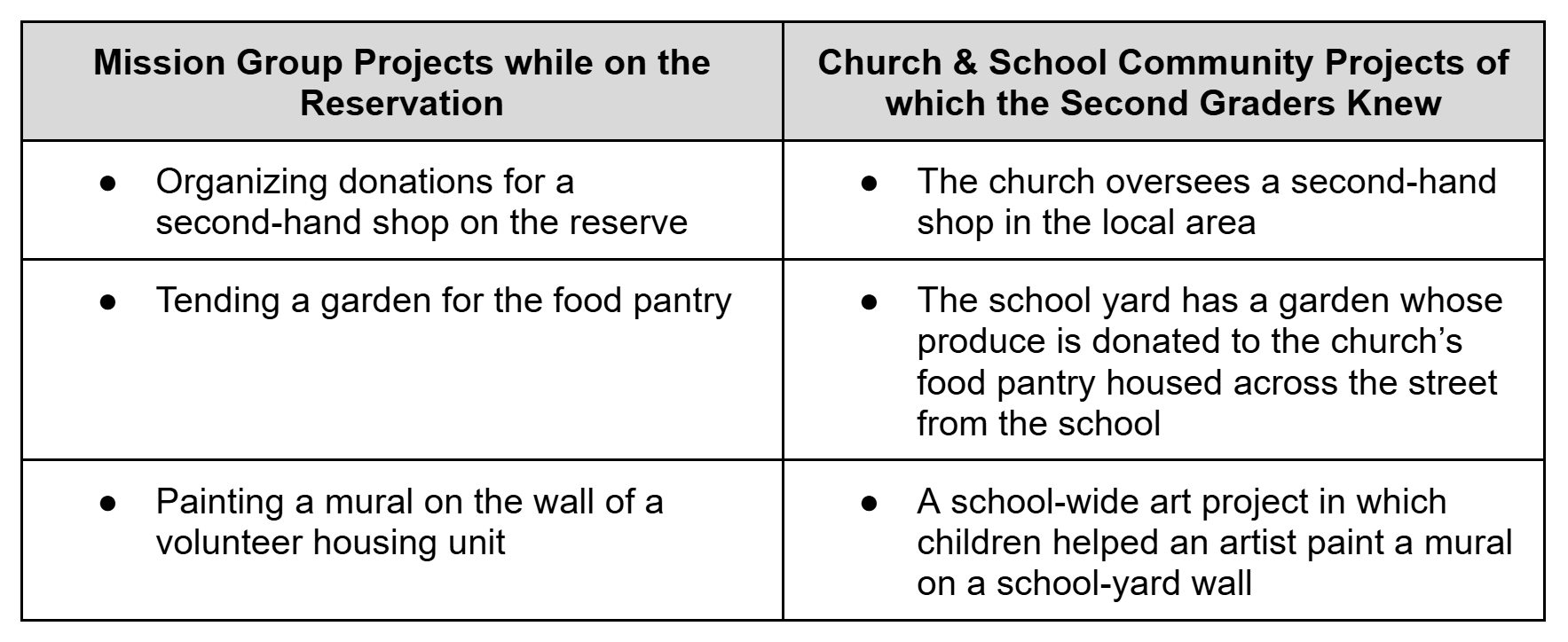
Additionally, my mom shared pictures depicting the different service projects in which the mission group engaged while on the reservation and compared them to the service projects of the children’s church and school community. Here are some examples of what that looked like:
It’s often mentioned that a mission trip has more lasting effects on those who serve than on those who were being served, and I like to think those lasting effects become ripples from one generation to the next if those on mission trips share their experiences with others. Mission trip stories change the hearts and minds of those who serve and of those who learn from their experiences.
In this particular case, I am inspired by a three-generation literacy initiative that would not have unfolded if it were not for representatives from two church communities working together to bring what children were learning in their literature unit into their real lives. Here is just another example of ways church communities offer a rare opportunity in our culture for intergenerational literacy experiences.
If you want to explore that claim further about religious spaces remaining one of the few places in which young learners can have a multigenerational literacy experience, please check out last week’s article #25 titled “Put the Bibles Back in the Pews.”
And that’s just one more way we can make reading VISIBLE. VITAL. VALUED– together.
If you’re enjoying these articles, please take a moment to click the🤍at the top or bottom of this email. You can also explore past posts anytime on The Visible Reader website.
Know someone who values thoughtful, literacy-centered content? Invite your family, friends, and colleagues to subscribe and become part of our growing Visible Reader community.